How Yorkshire inspired David Hockney
Gregory Wakeman in conversation with Cartwright Hall Art Gallery on their exhibition Before the World Knew Hockney.

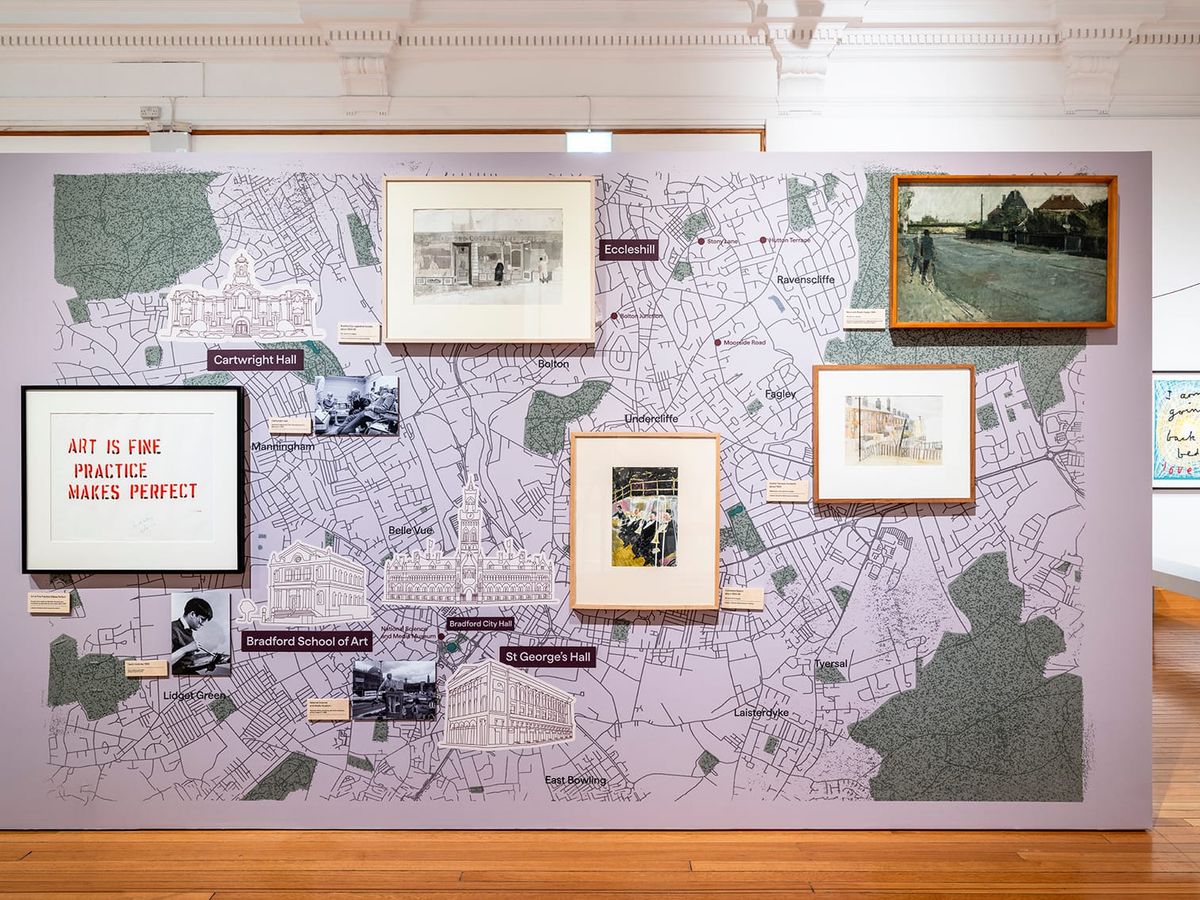
Bradford’s Cartwright Hall Art Gallery recently opened its new exhibition Before the World Knew Hockney. Free to enter, it tells the story of how Bradford shaped iconic Yorkshire painter David Hockney just a few months after his death at the age of 88.
Hockney was born in Eccleshill, Bradford, on July 9 1937, remaining in the city until 1959, when he left to attend the Royal College of Art in London. It was in Bradford where Hockney fell in love with art and declared at the age of 11 that he wanted to be an artist.
That proved to be quite a wise career choice, as artworks like A Bigger Splash, Portrait of an Artist (Pool with Two Figures) and Nichols Canyon turned Hockney into one of the most popular painters of the last century. His pieces have cumulatively sold for around £1.075 billion.
In the Cartwright Gallery’s new collection, visitors can see a variety of Hockney’s early work, as he learned to draw and find his creative voice. On display are sketchbooks, drawings and paintings from Hockney’s time at the Bradford Grammar School and Bradford School Of Art, which he attended between 1948 and 1957.
“We wanted to tell his very specific Bradford story,” explains Jill Iredale, curator at the Cartwright Hall Art Gallery. Their ambition is to show how Hockney first learned perspective and began his journey to becoming one of the world’s most recognisable artists by “drawing trees and houses on the streets of Bradford”.
“We’ve got some early drawings from David of streets, houses, and interiors,” she goes on to say. “They’re very simple and clear. He was always very precise about where he was going to put his paintbrush or pencil before starting. They’re just so beautiful to look at. We’ve also got his drawings of anatomy, like skeletons and muscles, which he did in his traditional art training.”
Hockney has a long-standing connection to Cartwright Hall. It previously opened The David Hockney Gallery – a permanent exhibition of Hockney’s work – back in 2017 to mark his 80th birthday. At the time, Hockney said, “I used to love going to Cartwright Hall as a kid. It was the only place in Bradford I could see real paintings”.
As well as visiting Cartwright regularly as a student at Bradford Grammar, Hockney would also pop into the gallery when he returned to his home city from Los Angeles, New York and London.
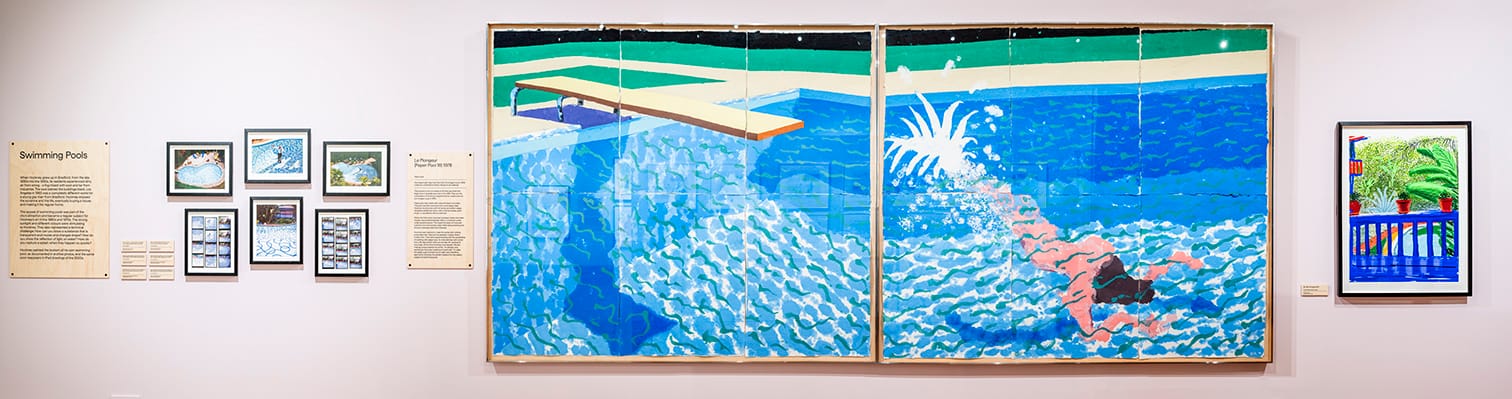
Iredale says Hockney was always very involved in what would be shown at the Cartwright exhibitions. He regularly provided early examples of his work, as well as later pieces that showed a progression of his ideas.
This included The Blue Guitar, A Rake’s Progress, his illustrations of Six Fairy Tales from the Brothers Grimm, plus a pot of flowers on a window ledge, which he painted at 18, and his iPad paintings of pots of flowers on window ledges 80 years later.
For Iredale, being born and raised in Yorkshire and Bradford played a vital role in helping Hockney become such a vivid and enduring artist. “He often credited Bradford for teaching him how to look,” she says. “You need to be able to look before you’re able to draw. It’s also where he got his work ethic, as he came from a working-class family.”
Bradford’s industrial landscape and the smoggy air that surrounded the city also had a lasting impact on Hockney, says Iredale. Not just in terms of Hockney looking for the beauty in the dirt, but it fed his obsession with light, colour, and – once he moved to the West Coast of America – even inspired him to make the sun and shine of California even brighter in his paintings.
“When he went to America, he went from one extreme to the other, and it made his work very visually exciting,” explains Iredale.
Ultimately, Hockney continues to resonate for people across the world – whether it’s Bradford, Los Angeles, Tokyo, or Bermuda – because his work is so accessible.
“He loved to paint people, landscapes, portraits, and pools, things that everybody sees,” says Iredale.
“He did so in an honest and sometimes humble way, always with fascinating use of colours, that was both beautiful and calming. You don’t need to have a degree in art history to understand what’s going on.”
In the wake of Hockney’s death, Iredale says there’s been a huge uptick in visitors to Cartwright.The hope is that the new exhibition – and its depiction of Hockney’s first steps to becoming a global art phenomenon – can inspire a whole new generation of artists.
“David’s death was felt in Bradford,” says Iredale. “We’ve seen an increase in numbers after his death and we just hope that visitors can be inspired by the building and the works on display, no matter their age.”
Before the World Knew Hockney will run until October 21 2029.