The decline of the River Wharfe is the result of a "failed experiment"
One of Yorkshire’s most cherished landscapes is paying the price for greed, mismanagement and poor oversight.

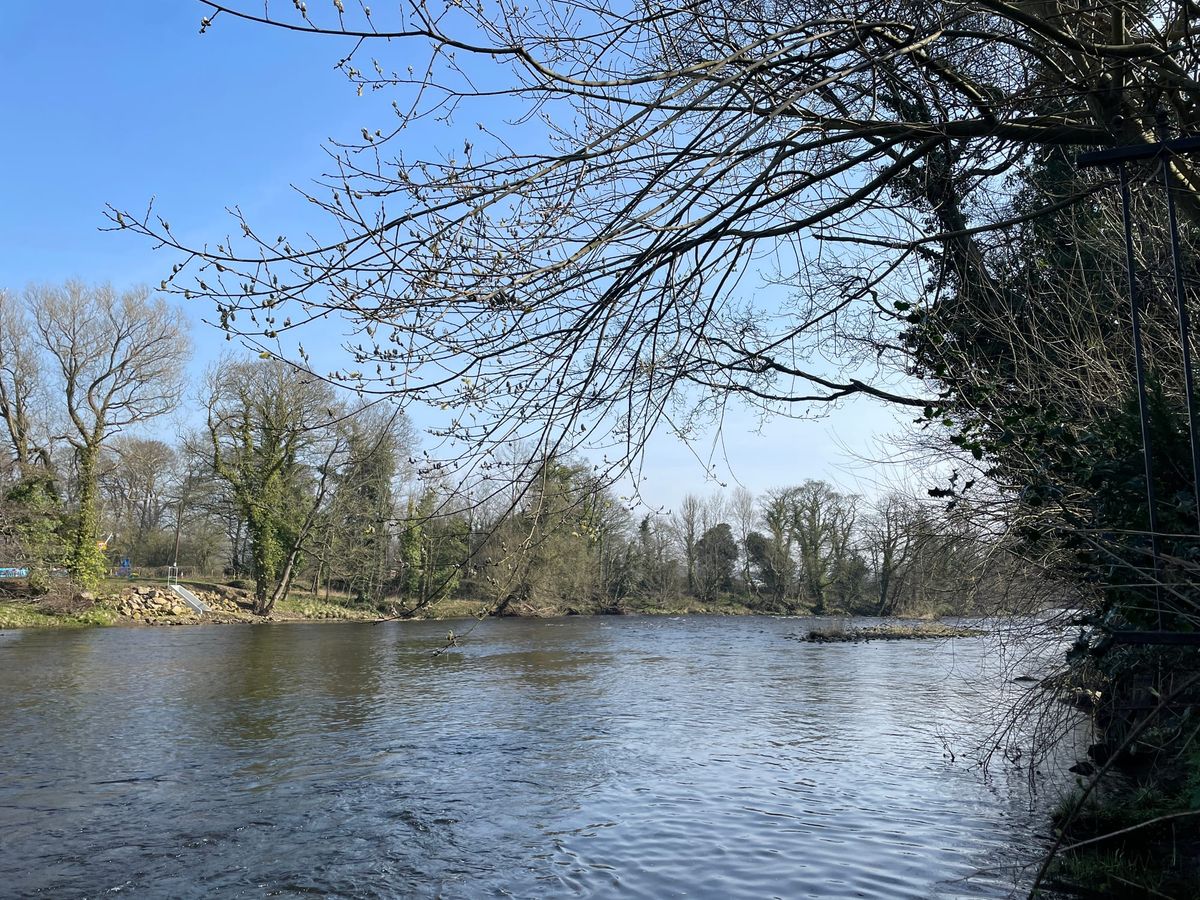
If you were hoping for a reassuring update on the River Wharfe following the broadcast of Channel 4’s Dirty Business in February 2026, the subsequent months have offered only a sobering correction.
Thanks to a Freedom of Information release obtained in June this year by former Environment Agency officer and whistleblower Rob Forrester, characterised in the Channel 4 show as “Hannah Swift”, we now have access to the hard data Yorkshire Water and its regulators might have preferred remained private.
These figures, released at a Plasticfree North West Leeds event in July show that 2026 is not merely another difficult year for the River Wharfe. It is a moment in history when the river is ceasing to be a scenic asset and, instead, is at risk of becoming a documented legal record of institutional neglect.
The long-term data exposes a decade of systemic decline. Between 2017 and 2026, Yorkshire Water was associated with 160 recorded pollution events on the Wharfe.
Of these, the Environment Agency attended a mere 20. Most damning of all is the total absence of regulatory enforcement: across those 10 years, only one single incident resulted in any formal action – a solitary £200,000 charity payment negotiated back in 2017.
When we isolate the figures for 2026, the collapse of active regulation becomes undeniable. During this year, Yorkshire Water was directly responsible for 13 pollution incidents on the Wharfe: one “category 2” event (denoting significant environmental impact), 11 “category 3” events” and one “Category 4” event.
Of these 13 incidents, the Environment Agency attended only one, completely ignoring the most serious category two event. To achieve an attendance rate of just 8% on a major northern river – and to miss the only significant pollution incident entirely – suggests a regulatory body that has completed its retreat from active stewardship into passive spreadsheet monitoring.
Yorkshire Water’s infrastructure continues to decay, its corporate structure remains complex and yet the dividends flow, the debt grows and the river is treated as a convenient overflow pipe.
The depth of public feeling on this issue is clear and the local evidence is striking. Plasticfree NW Leeds’ recent polling data across 20 West Yorkshire Facebook community groups reveals a remarkable consensus: support for renationalising the water industry sits at or close to 95% across northern and central Leeds.
While this data represents the informal, organic responses of local social media forums rather than a formal academic study, it is a powerful index of civic outrage.
These are the everyday verdicts of residents and visitors who watch the Wharfe turn brown with every heavy rainfall. They see corporate profits rising while the river’s health collapses and they have reached a non-negotiable conclusion:i f you’re trapped in an abusive relationship, you should be allowed to leave.
The consequences of this neglect are borne directly by the Wharfe's fragile ecosystem. This is not an abstract debate about regulatory percentages – it is a tragedy of Shakespearean proportions.
The river’s once-celebrated salmon runs are collapsing, as returning fish struggle against deteriorating water quality. Invertebrate populations – the very foundation of the river's food chain – are under severe stress from chronic nutrient overloading. In summer, thick algal blooms blanket the shallows, depleting oxygen and choking the life beneath. Even apex predators like the otter are forced to hunt through turbid, contaminated waters.
The government’s response to this ecological crisis is marked by a familiar bureaucratic optimism. Ministers speak of "streamlining regulation", "modernising permitting" and "reducing burdens on growth" – phrases that sound tidy on a podium but lose all meaning when confronted with the reality of a dying river.
Alongside these promises, the government has announced what it calls the "largest ever budget for Environment Agency water regulation."
Crucially, however, this is funded not by direct public investment, but by increased charges and enforcement levies on the water companies themselves. It is a circular funding model where the polluters bankroll the policing, raising serious questions about the independence and capacity of the regulator.
Furthermore, the planned abolition of Ofwat and the folding of its duties into a single agency is presented as decisive action, yet serious pollution incidents across England have reached their highest level since 2013.
No amount of administrative restructuring can fix the Wharfe while the core incentives of the water industry remain unchanged. As long as water companies exist as private monopolies obligated to service massive debt and prioritise shareholder dividends, regulatory reshuffling will only delay the necessary reckoning. Public ownership remains the only model capable of aligning capital investment, public accountability and ecological survival.
The Wharfe’s 2026 data is more than a scandal. It is an indictment of a failed experiment. The private water management model has buckled under the weight of its own record – Yorkshire Water has failed in its stewardship, the Environment Agency has been starved of the ability to act and one of Yorkshire’s most cherished landscapes is paying the price.
This is not a matter for dry administrative review or light political satire. It is a profound failure of public duty. Now that the facts are clear, we must decide how long we are willing to tolerate the slow destruction of our natural heritage. The Wharfe cannot speak for itself. That responsibility falls to us.
Also in The Journal: we went on a journey to discover more about councillor Stephen Place, Bradford Council’s new leader. Here's what we found ...
For a while, Stephen Place was content with sharing his two cents on social media. He had no qualms about what he posted. This was who he was, what he thought and how he saw the world. Not that it mattered (basic civility notwithstanding). He wasn’t worth paying attention to. He didn’t have anything interesting to say. He was just another unremarkable and predictable voice on the online right drowned out by the feverish clamour of a “virtually lawless public square” overflowing with people clamouring to be heard and seen in an AI-powered “golden age of stupidity”.
Here's what we found out.