West Yorkshire mayor commits to visitor tax cap
Your roundup of local news in West Yorkshire.

West Yorkshire mayor backs visitor levy limit
The mayor of West Yorkshire has joined fellow regional Labour mayors in committing to a 5% visitor levy increase after the government announced it would devolve more powers to them.
Tracy Brabin joined Claire Ward, mayor of the East Midlands, David Skaith, mayor of York and North Yorkshire, Oliver Coppard, mayor of South Yorkshire, Sadiq Khan, the mayor of London, Kim McGuinness, mayor of the North East, Bev Craig, mayor of Greater Manchester, Richard Parker, mayor of West Midlands, Steve Rotheram, mayor of the Liverpool City Region, Helen Godwin, mayor of West of England, in committing to capping the amount.
It came in response to the ministry of housing, communities and local government revealing its plan to allow local leaders to have the power to put in place an overnight visitor levy, with the discretion to charge as much or as little as they see fit.
“Devolution is delivering and it is right that mayors get these new powers to introduce an overnight visitor levy,” said Brabin. “Our beautiful region has so much to offer; from Brontë Country to the Hepworth Gallery, the rolling moors to our bustling city nightlife, arts and theatre to beautiful architecture.
“By asking people to make a small contribution, like in many other European countries, we can continue to invest in culture, grow our economy and ensure people want to visit for generations to come.”
According to the government, the money raised by the levy, which would be added to visitor accommodation, would be reinvested locally, from improving public transport to cleaning up streets – as well as “events to boost tourism”.
Angela Rayner, the secretary of state for housing, communities and local government, said that it was only right that local leaders should have the power to make the most of the popularity of their areas.
“This measure will give mayors the choice to raise and reinvest funding where it’s needed most,” she added. “It’ll help support the local services, public spaces and attractions that both residents and visitors rely on, with decisions taken by people who know their area best.”
UKHospitality, the trade body for hospitality in the UK, said that the announcement would have a “genuinely catastrophic impact” on the industry, resulting in, according to its numbers, the loss of around 33,000 jobs and a massive £2.2 billion hit to GDP.
“The millions of families who will be forced to pay significantly more for their holiday will hardly be comforted by their money going to prop up local government, when they’re struggling to make ends meet,” commented Allen Simpson, chief executive of UKHospitality.
“In a week when the government has talked about growth, cutting red tape, getting people back into work and supporting hospitality, it is set to announce yet another tax that will do the absolute opposite.”
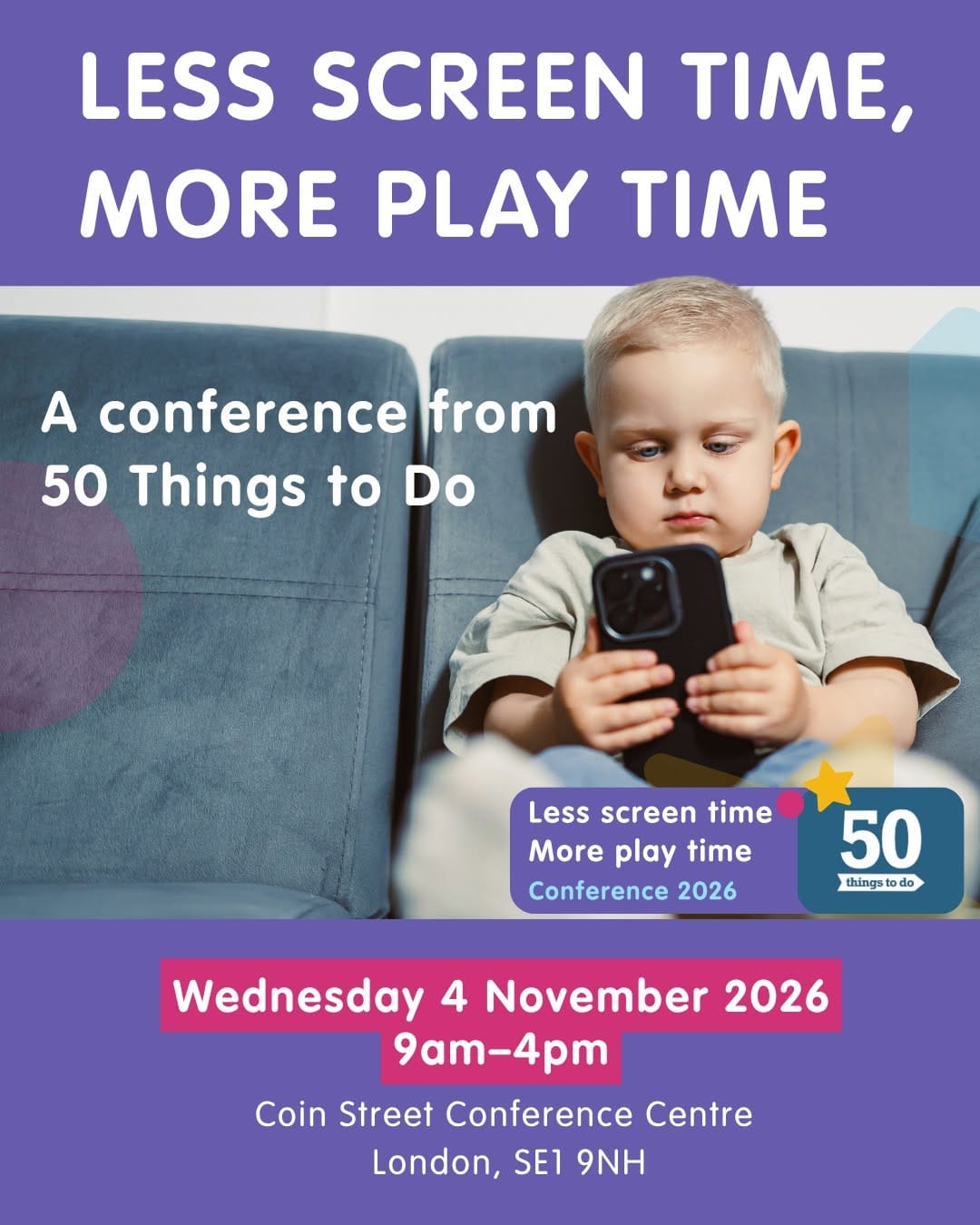
Early years screen time challenge to get national spotlight
A Bradford-based early years organisation is hosting its first ever national conference in November in London to raise awareness of the growing challenges posed by increasing screen use during a child’s early years.
The Less Screen Time, More Play Time conference will bring together some of the biggest names in the sector to draw attention to problems associated with too much screen time in early childhood – and, more importantly, how it can be tackled.
The lineup of speakers at the event, which has been put together by Birth to 19’s Institute for the Early Years through its 50 Things To Do initiative, includes professor Sam Wass, a developmental cognitive neuroscientist, and Dr Guddi Singh, a paediatrician who presented the BBC’s Three Ages of Child on Radio 4.
“For the past year, we've been working with practitioners, families, researchers and partners exploring the impact screens are having on our youngest children,” said Rebecca Oberg, the director of the Institute for the Early Years last month, as she announced the less screen time, more play time event.
“Our conference will explore the growing impact of screens on childhood, what screen time can displace, and, most importantly, what we can do to create childhoods full of curiosity, movement, imagination, connection and play.”
According to the Department for Education, screen time for under-fives should be strictly limited. For under-twos, the advice is to avoid it altogether unless it’s for “shared activities that encourage bonding, interaction and conversation”.
For 2–5-year-olds, one hour a day max is recommended – and for there to be no screen time around meal times and up to an hour before bed.
“Parenting in a digital world can feel relentless. Screens are everywhere, and the advice is often conflicting,” said the former Labour PM Keir Starmer earlier this year when the new guidance was announced.
“My government will not leave parents to face this battle alone. Our new guidance cuts through the noise with clear, common‑sense tips to keep children safe and make sure healthy habits are baked in from the start.
There will be some who will oppose us doing this. But whether it’s navigating technology, tackling the cost of living or balancing the demands of family life, I will always stand on the side of parents doing their best for their children.”
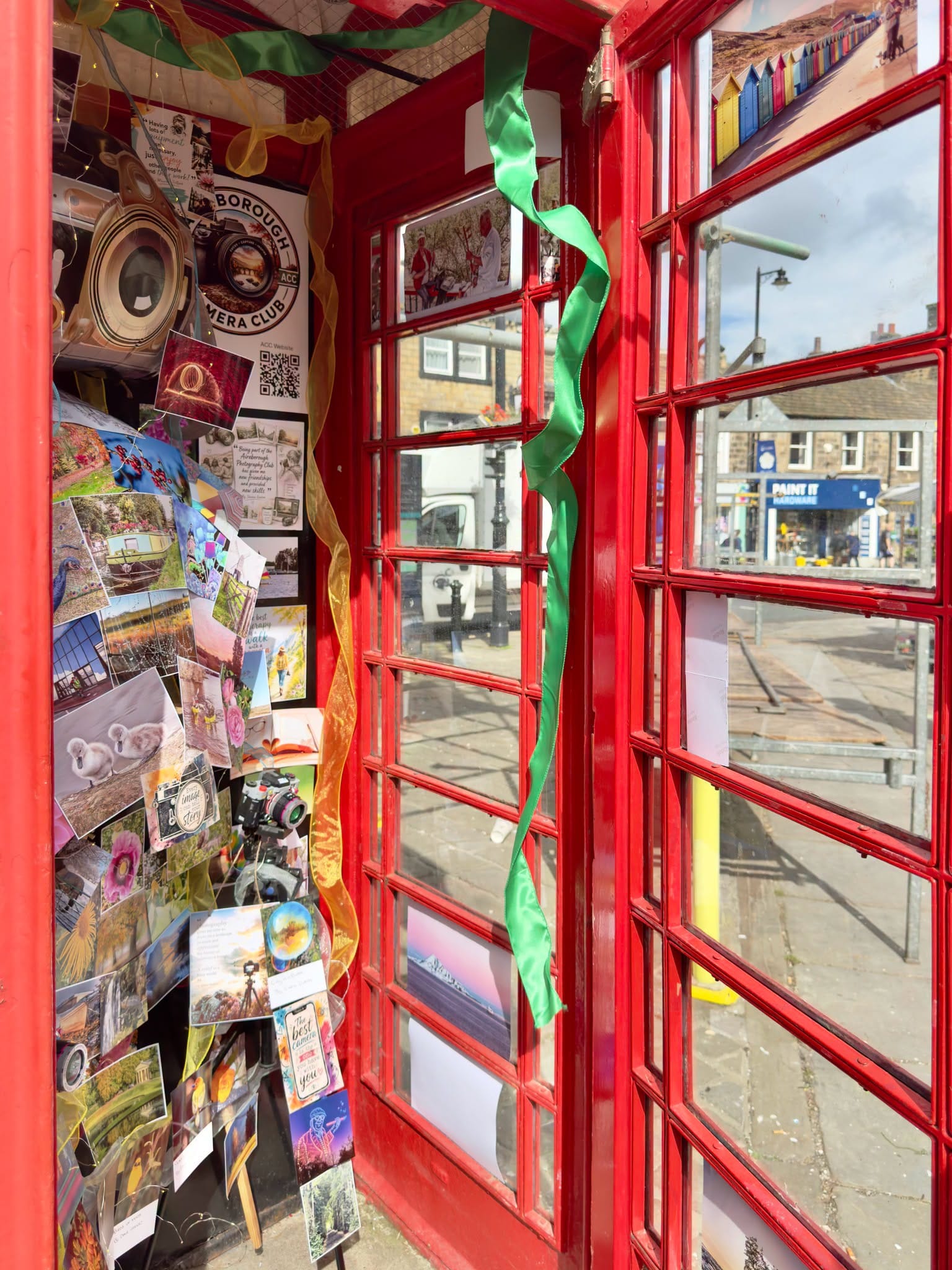
Aireborough Camera Club announce new mini exhibition
“Let The Light In” is the title of a new mini exhibition by Aireborough Camera Club (ACC), which seeks to raise awareness of the impact that mindful hobbies can have on mental health – like photography.
Featuring work by members of the camera club, which has been around for more than 60 years, the photographs have gone on display in the red telephone box in Otley’s market square.
“Loneliness and isolation is a challenge for many people and can be devastating,” they explained. “As the nights will start to draw in this autumn, being a member of a club such as ACC can be a great way to meet new friends, learn something new … and feel a sense of connection to other people and the world around us.
“It can truly be a source of light in otherwise rather gloomy weeks.”
The club also hosts photography exhibitions, including the annual print competitions, the annual digitally projected image competitions, challenge night, three photos on a theme, and the AV Competition.
More information about how to become a member – including club rules and regulations – and the club's programme can be found on Aireborough Camera Club’s website.
Rates of violence for Bradford teens “significantly lower than national average”
The rates of violence experienced by 13–17-year-olds in Bradford are significantly lower than the national average, according to a new study.
Born in Bradford reported that around 8% of Bradfordian teens reported that they had been a victim of violence over the last 12 months. The national average for 13–17-year-olds was approximately 20%.
The study also found that 63% of youngsters surveyed felt safe at school “all or most of the time” and that young girls felt less safe than boys at night and at school.
“Bradford teenagers are, statistically, safer than the national average,” said Dr Rosslyn Kerr, a research fellow at Born in Bradford. “Yet nearly half feel unsafe after dark and over a third don’t consistently feel safe at school.
“This matters because feeling unsafe has real consequences even when actual harm is low. It can reduce physical activity, affect sleep, harm mental health, and can lower academic achievement.”
Last month, Born in Bradford’s Age of Wonder survey of 7,000 12–15-year-olds discovered that 29% of respondents had spent cash on gambling at least once.
The study also found that one in six youngsters had gambled via a slot or fruit machine, as well as playing card games for money with pals.
Leeds City Council councillors to consider community-led improvement programme
The executive board at Leeds City Council is to meet next week to discuss plans for a community-led improvement programme that aspires to bring together the local authority with residents across all 33 wards in the city.
Determining what improvements would happen would be unique to each ward and “based on residents’ priorities”, from cleaning streets to getting rid of graffiti.
Describing the neighbourhood-led programme as exciting, James Gibson, executive member for the environment on Leeds City Council, said that it would give locals a “real say” in shaping their wards.
“We want this to be the beginning of a new way of working in Leeds, with everyone pulling together through the ‘#TeamLeeds’ approach,” he added. “By supporting local communities and giving people the tools to make a difference, we can help improve neighbourhoods and the lives of those who live in them.”
The model underpinning the programme has been designed around four phases “on a rolling cycle”.
Phase one would develop ward profiles, phase two would involve public consultation, phase three would see improvements being made in partnership with all stakeholders and phase four would be “focused on ensuring sustainable improvements into the future”.
Last week the BBC revealed that Leeds City Council had approved the expansion of Broomfield South Specialist Inclusive Learning Centre, which will see a new three-storey teaching block built.
Also in The Journal: we went on a journey to discover more about councillor Stephen Place, Bradford Council’s new leader:
For a while, Stephen Place was content with sharing his two cents on social media. He had no qualms about what he posted. This was who he was, what he thought and how he saw the world. Not that it mattered (basic civility notwithstanding). He wasn’t worth paying attention to. He didn’t have anything interesting to say. He was just another unremarkable and predictable voice on the online right drowned out by the feverish clamour of a “virtually lawless public square” overflowing with people clamouring to be heard and seen in an AI-powered “golden age of stupidity”.
Here's what we found out.