After 94 years, Bradford Movie Makers prepares for its first international film festival
Gregory Wakeman explores one of the oldest surviving amateur filmmaking clubs in the world.

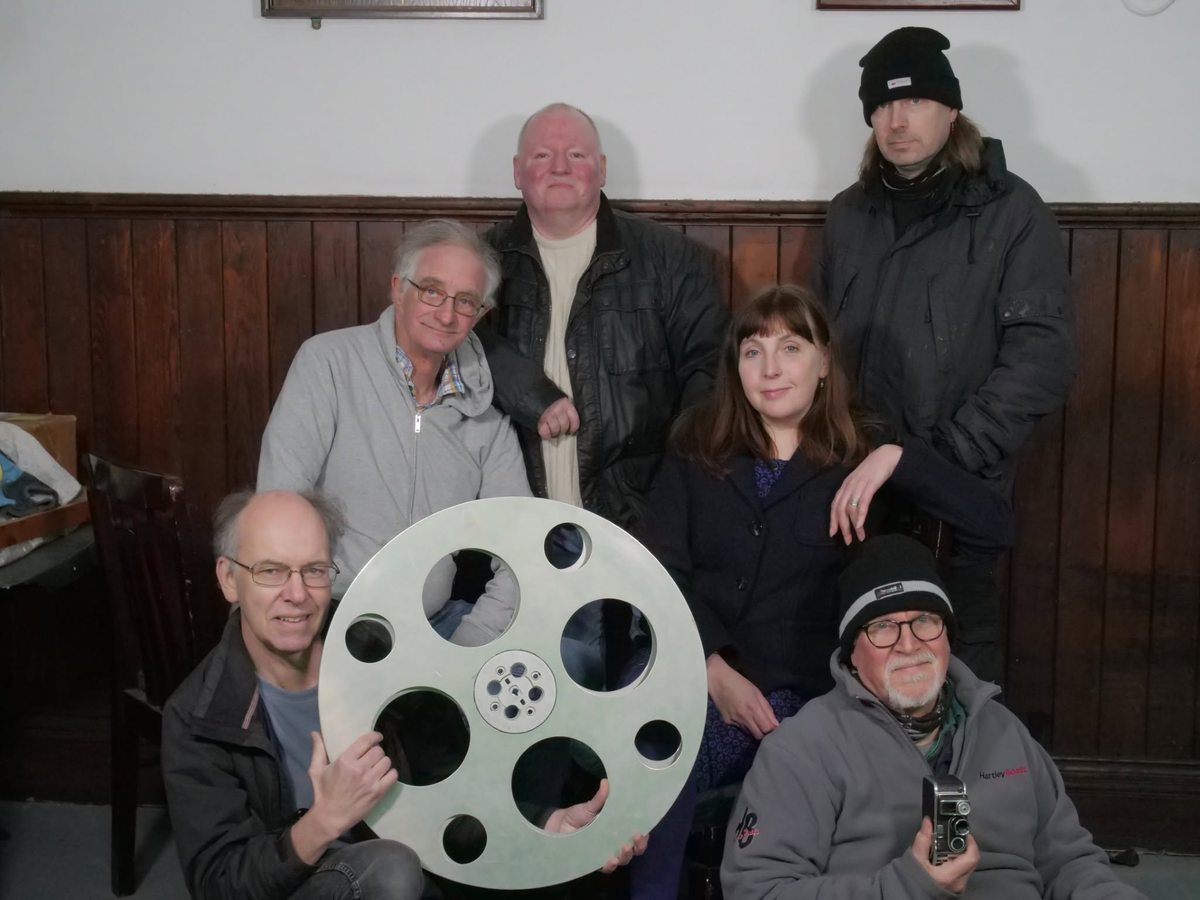
Even after 94 years, the Bradford Movie Makers amateur film club continues to evolve. Founded in 1932 as the Bradford Cine Circle, its members have been meeting up once a week for decades to screen, archive and discuss all things cinema – and then make all types of different shorts and documentaries. It is widely considered to be one of the oldest surviving amateur filmmaking clubs in the world.
Since 1935, the hub of all that activity has taken place in the same building just off Little Horton Lane. And on Saturday 10 October, it will be the very venue for the Bradford Movie Makers’ first-ever international film festival.
As well as screening movies made by its own members, the club has selected entries from Brazil, Iran, Russia and other parts of the UK, which were submitted through the FilmFreeway website (considered the world's leading platform for submitting films to festivals). While entry to the festival is astonishingly free, donations are very welcome.
“We just thought, why don’t we have a film festival?” answers Dave Marshall, the current president of the Bradford Movie Makers, when asked about the event’s origins. True to form, the club has also worked closely with filmmakers from across the world to ensure that their work could be screened, even at the expense of the Bradford Movie Makers’ own finances ...
To cover the £75 cost to register the film festival on FilmFreeway, Bradford Movie Makers had initially charged filmmakers a minimal entry fee of between £3.75 and £12.
“But we had filmmakers from Iran and Russia asking for fee waivers to enter because you have to pay Film Freeway in dollars and there’s no way they could do that,” explains Marshall, as people living in these countries are unable to make direct payments to American companies.
Bradford Movie Makers were so impressed by the films from Iran and Russia that they allowed them to submit their work for free. “We let them off because their films are really good,” declares Marshall.
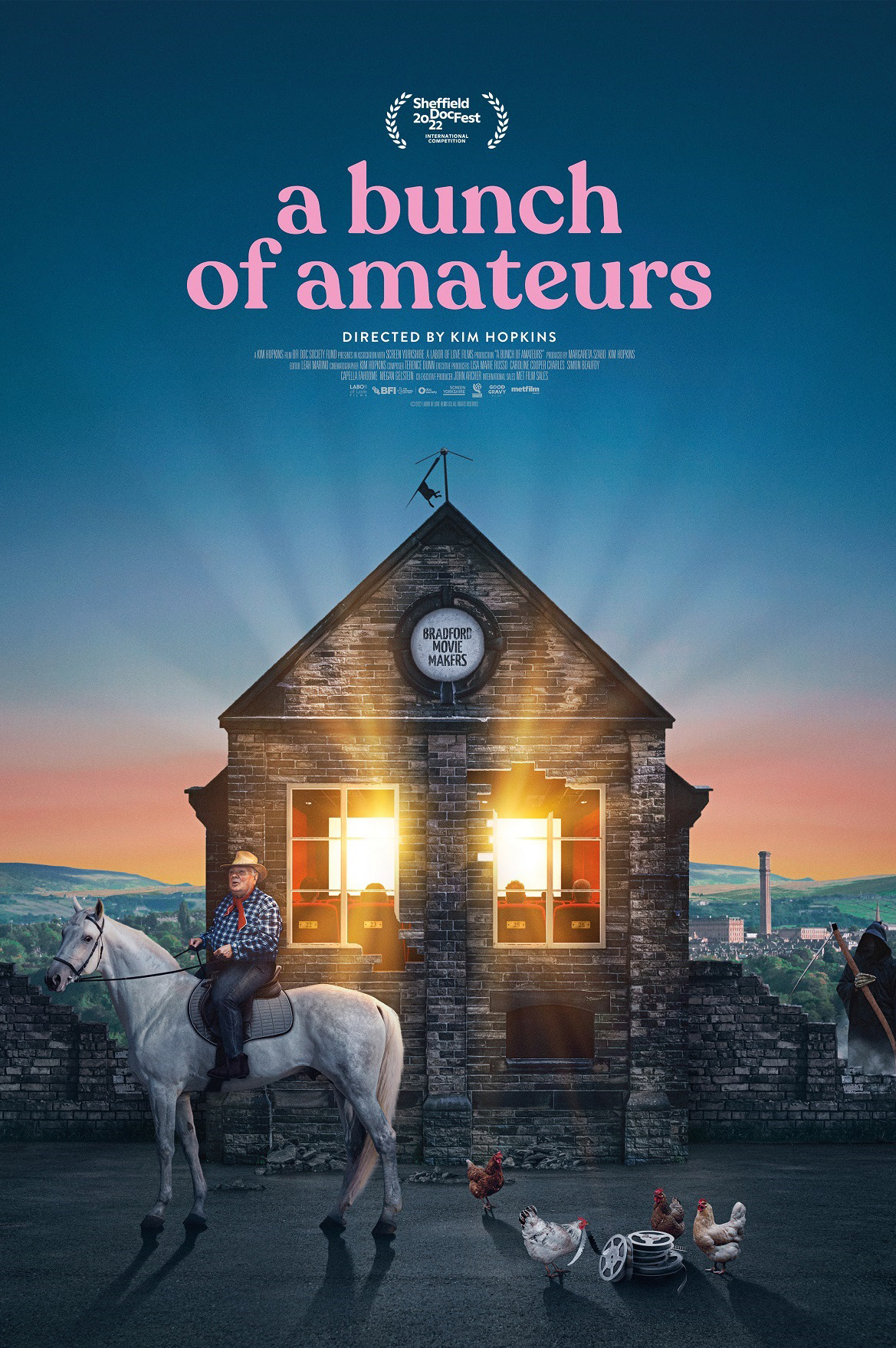
Viewers of A Bunch Of Amateurs – the 2022 documentary that depicts Bradford Movie Makers creating their own films while struggling to keep the club afloat – will know that the club is as much about community as it is about celebrating cinema.
Directed by Kim Hopkins - the award-winning, Yorkshire-based documentary behind Voices of the Sea and Man In The Sand - A Bunch Of Amateurs shows members helping each other through grief while trying to figure out a way forward for the club – as well as documenting them relentlessly bickering as they make a homage to Oklahoma! shot in a Bradford field and numerous other horror shorts.
Critically acclaimed for its heartwarming depiction of camaraderie, England’s dwindling club community and filmmakers shooting for passion rather than profit, A Bunch Of Amateurs won the Audience Award at the 2022 Sheffield Doc/Fest, the Feature Documentary Audience Award at the Leeds International Film Festival, as well as prizes at film festivals in Leipzig, Germany, and Santa Barbara, California.
“I just wanted to show the working class with kindness and show how good they are at creating a community,” says Hopkins, who shot over 90 hours' worth of footage of the Bradford Movie Makers between April 2018 and August 2021.
“I remember I wanted to call it A Bunch Of Amateurs and because the word amateur has all these different connotations now. I had to tell them that it comes from the Latin and French word that means doing something for love, not for career and money. They loved that and really embraced the word amateur.”
Marshall doesn’t think any Bradford Movie Makers film has ever been shot with a budget. Instead, they all act in each other’s work. And if they need props, they make them, while also transforming the streets of Bradford into any city in the world or planet in the galaxy.
They even have a small studio and green screen that they use for visual effects. In A Bunch Of Amateurs, when Harry Nicholls – a longtime member of the club – wanted to remake the opening of Oklahoma! for his ailing wife, he was unfortunately unable to get up on the horse. Instead, fellow Bradford Movie Makers Phil Wainman and Joe Ogden used the green screen and studio to impose Harry’s face over the horse’s owner as she rode the animal ...
“Our modus operandi hasn’t changed since the film was released,” insists Marshall – and each Monday members unite at the Bradford Movie Makers headquarters to chat, drink tea and discuss their next cinematic masterpiece made on a non-existent budget.
“Some people just turn up on a Monday to be social. Some members do more than others to make sure it’s running. I think I’ve shown three films at the club in the 37 years I’ve been coming.”
Now in his late 70s, Marshall spent his working life as a caterer. Then in 1989, he was diagnosed with cancer. While undergoing his punishing treatment, he sought an outlet to bring him some joy.
“I’d always had a passion for photography, so I did an honours degree at Bradford College,” he remembers. “One evening, after a class, I saw the Bradford Movie Makers advertising, so I just went along.”
Marshall never stopped going. After the death of the beloved Colin Egglestone earlier this month, he’s now the longest-serving member as well as the president.
Marshall’s main ambition for the future of Bradford Movie Makers is to ensure that the club reaches its centenary in 2032. But while A Bunch Of Amateurs undoubtedly brought more attention to the organisation, and made sure that they now have enough money to pay their rent and heating bills on time, Marshall insists their financial situation is still “rocky, if not desperate”.
His major concern is the median age of the members. “The club was thriving up until the 1990s, then most of the members passed away,” he explains. “We were struggling for decades.
“A Bunch Of Amateurs put us under the spotlight and gave us a reputation, but not many people kept coming back. Our membership is still at the same level. We only have two members in their early 20s and the rest of us are 50-plus.”
Marshall believes there’s plenty the group can teach young filmmakers. They even have cameras, equipment and editing facilities that they’re willing to loan filmmakers so they can fulfil their cinematic pursuits.
And when a director approaches the club with a film, the Bradford Movie Makers watch their work as a group, celebrate the director’s achievements and then offer advice and support for how they can move forward as a filmmaker.
Hopkins remembers one young director who screened his film at Little Horton Lane breaking down in tears at the support they got from Bradford Movie Makers, proof that a round of applause has much more impact than a thumbs up on YouTube.
“A few weeks ago, I got an email from a Dutch guy, Ron Hoek,” recalls Marshall. “His wife died last year. She loved British literature, they’d seen A Bunch Of Amateurs, and he wanted to scatter her ashes at Top Withens.
“He asked if we could help him do it. I got two of the club members to help him, as I have a bad back. We then had a couple of pints and homemade pies with him at the pub near the club. Obviously we filmed it all. That's what we do. If somebody approaches, we’ll try and get anything going for them if they’re nice.”
Such stories of goodwill and filmmaking bringing people together are exactly why film clubs are so vital, insists Hopkins, who believes that the disappearance of third spaces like the Bradford Movie Makers only increases division across the country and world.
“It leaves us stuck behind our computer screens, getting manipulated by algorithms,” she says. “These places allow people to communicate with each other and not get so polarised. It's so important for us as human beings to be reminded of what makes us all so human.”