David Hockney remembered
A short celebration of the late, great Bradford-born artist who leaves behind an incredible legacy.

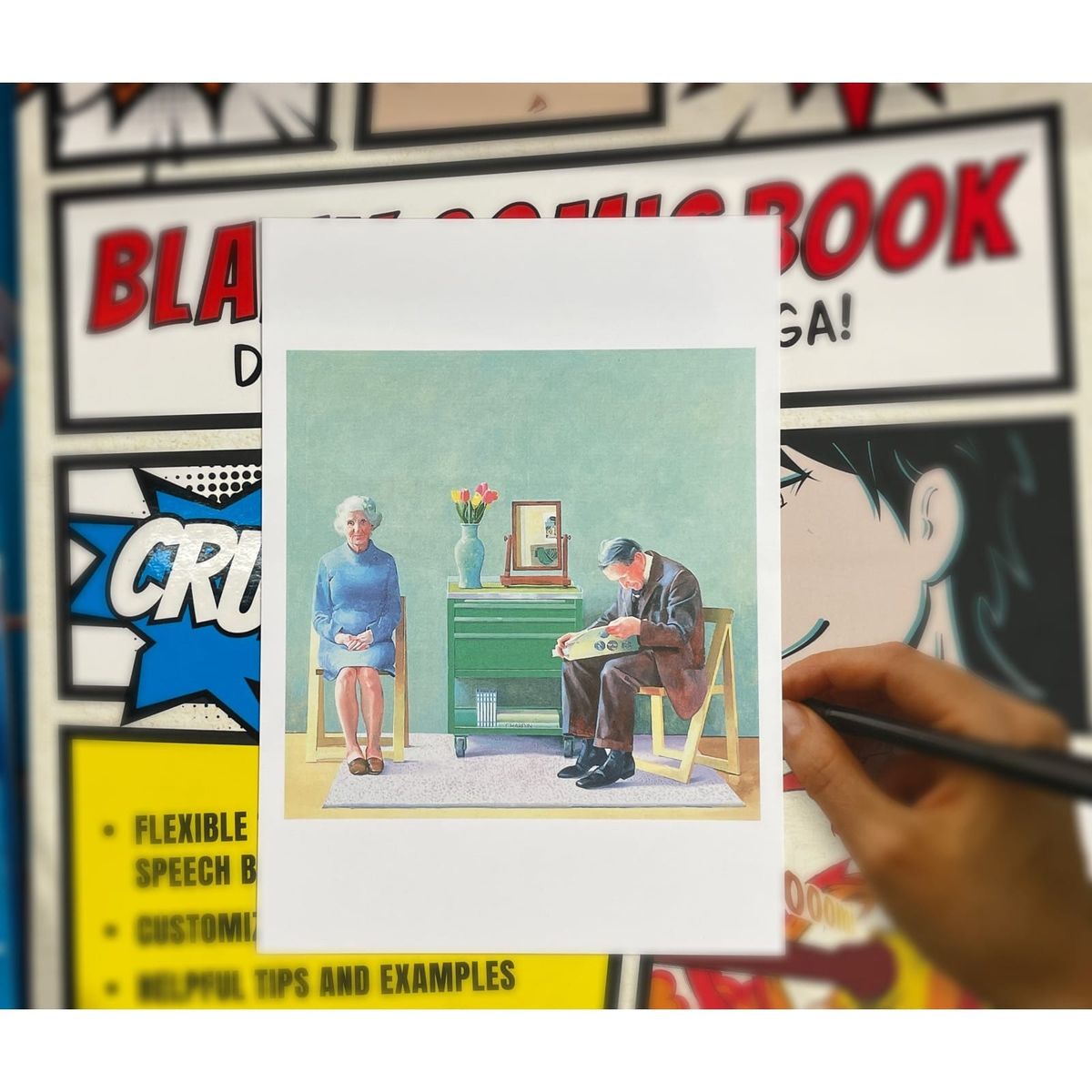
David Hockney, one of Britain’s most recognisable and best-loved artists of the 20th and 21st centuries, died earlier this month. And with his passing, the art world has lost one of its living legends – the "best draughtsman since Picasso" as the artist Mark Wallinger recently described him.
Hockney rose to fame with his early-career depictions of Californian swimming pools and landscapes that captured the bohemian optimism and dazzling light of late 1960s Los Angeles.
There was, of course, as there always will be, A Bigger Splash (1967), which the art critic Kelly Grovier said was "one of the most instantly recognisable images in art history". But there was also California (1965) and Peter Getting Out of Nick’s Pool (1966).
“I think the world is beautiful and exciting and mysterious,” he once said, and this lust for life comes through in his work, in his ecstatic use of colour, geometry and clean lines.
In the latter half of his life, Hockney turned this characteristic style to the hills, forests and fields of his childhood, painting a series of landscapes based on scenes around East Yorkshire, including around the Bridlington area where he lived between 2005 and 2013.
His landscape painting Bigger Trees Near Warter (2007) the largest work he ever created, measuring 12 metres by 4.5 metres, depicts a coppice near Warter, Pocklington in the East Riding of Yorkshire.
Even as his visual language became iconic the world over, Hockney stayed a down-to-earth Yorkshireman to the last, "I am very fed up with being a very public 'art celebrity'," he once said.
In 1990, he refused a knighthood. Explaining why to the Telegraph & Argus in 2003, he said that he did not think that life was about prizes.
"I put them all in the bottom drawer and leave them there," he added. "I don't value prizes of any sort. I value my friends. Prizes of any sort are a bit suspect ... I don't have strong feelings about the honours system. I do not care for a fuss."
However, there were some honours that Mr Hockney was more than happy to accept. In 2007, a party was held at Tate Britain for his 70th birthday, at which the smoke alarms were turned off for ten minutes so that Britain's Greatest Living Artist – and a dedicated smoker – could have a cigarette.
In his final years he signed off messages with the words “love life”, a fitting motto for an artist who once said that "the sense and purpose of my paintings are pleasure and joy."
He reportedly turned down a funeral at Westminster Abbey in favour of a smaller, private ceremony in Yorkshire, with a public memorial to follow. A major exhibition at the Tate Britain, which will span seven decades of his artistic life, is in the works. It will open in 2027, which would have seen Hockney celebrate his 90th birthday.
"David was an endlessly inventive artist, with a unique vision of the world," Alex Farquharson, director of Tate Britain said. "He was always completely and courageously himself, both in his work and in life.
"He taught us about the joy of looking, seeing things the rest of us failed to notice - his witty and sharp observations a constant presence within his work and in person. The loss to the art world is immense."