Recovery Walk Weekend in Bradford: a reflection
Gavin Lee from West Yorkshire Justice and Recovery on his experience of the Recovery Walk Weekend in Bradford.

For 37 years now, September has been home to International Recovery Month to raise awareness of the challenges of addiction, the achievements made by people recovering from substance misuse and the many ways that people and organisations come together to change the story around it.
One such organisation is Faces And Voices Of Recovery (FAVOR) UK, which has, since 2009, been “connecting people with living and lived experience of addictions to alcohol and other drugs” and, through various activities and initiatives, like recovery walks, “breaking down the stereotypes and stigma that normally surrounds us”.
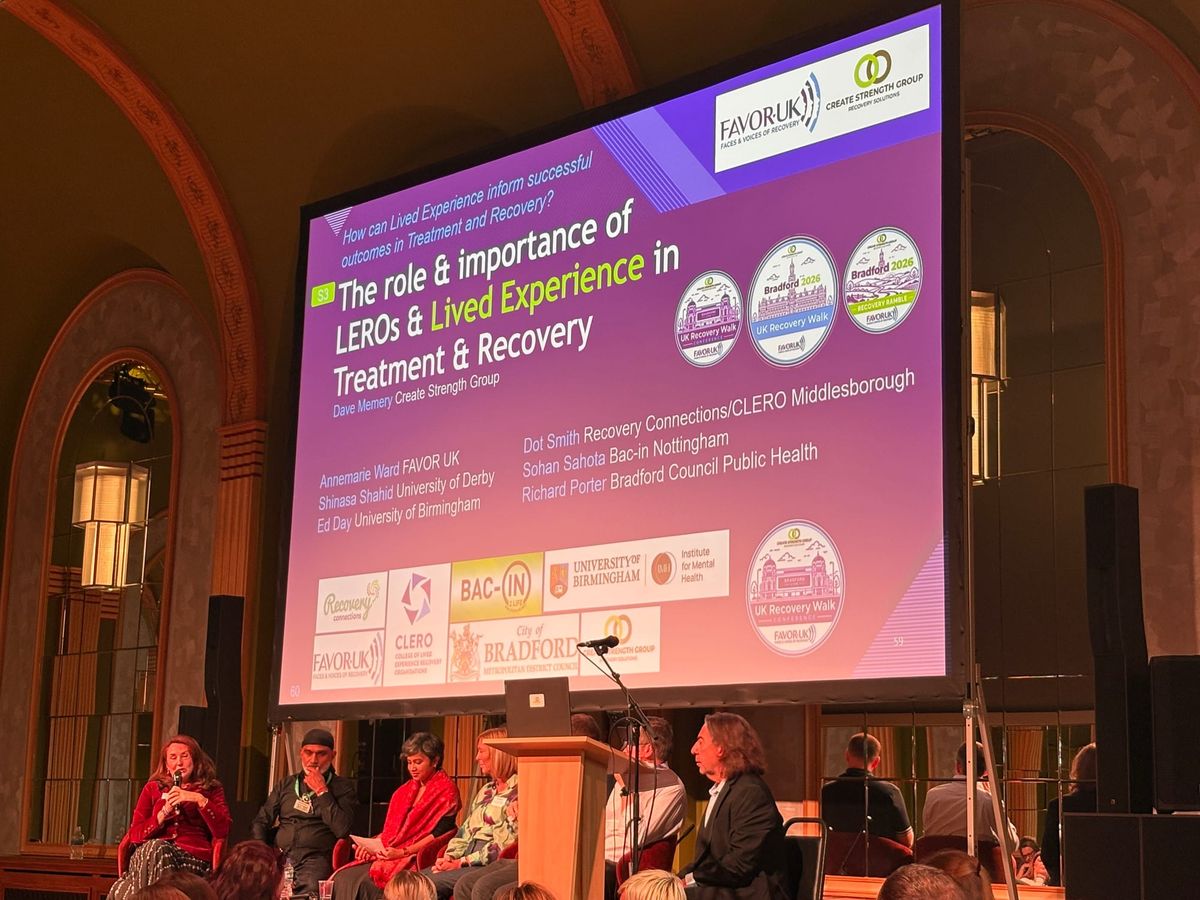
One of the ways it does this is through its annual UK Recovery Walk initiative, which has become an integral part of the UK Recovery Month. This year, in collaboration with the Bradford-based charity Create Strength Group, it hosted a three-day Recovery Walk Weekend (11–13 September) in Bradford.
It featured the Recovery Conference at Bradford Live on Friday 11 September, which was followed by a spiritual service at a local gurdwara and then a conference Dinner at Jinnah Kashmiri Restaurant.
It also included a looped UK Recovery Walk and Recovery Village from Centenary Square in Bradford on Saturday 12 September and a Recovery Ramble on Sunday 13 September in Shipley, which was followed by the Inclusive Recovery Cities Bradford event. This featured talks from Bradford Council’s head of public health, Liz Barry, and Create Strength Group’s CEO, Dave Memery.
I found Friday’s conference – which included 16 different speakers, of which six shared their direct, lived experience of addiction and recovery – to be an informative, inspiring and very hopeful experience.
Along with other delegates, I listened to the astonishing experiences as a former addict of 40 years, Tommy, shared his life story. For Tommy, trauma had been a key theme in his life. He explained how he had lost one brother to murder and another to suicide.
But there was also, of course, hope, with Tommy explaining how his partner of 30 years, or “our lass” as he called her, had been key to his ongoing recovery (as well as his dog Bruce). “The opposite of addiction is connection,” he said. And it’s a line that has stayed with me.
Another lived experience speaker, Daniel, talked about how a social navigator working for The Bridge Project, a Bradford-based charity that has supported people with substance abuse among other issues for over 40 years – which is linked into the probation service – helped him move out of crime and addiction.
And it had quite the impact on him. Daniel is now not only employed by this charity, but he has also gained a range of educational qualifications. He also said that his ongoing Christian faith has been the bedrock of his ongoing recovery.
Another highlight was Memery’s own journey of recovery, which has seen him go from being a heavy cannabis user in Greece to leading what is one of Bradford’s foremost lived experience recovery organisations (now in its 11th year of service).
He also reminded us about what International Recovery Month is truly about. It is not simply about the absence of drugs or alcohol, nor is it something that treatment services can deliver on their own. It is about people rebuilding their lives, reconnecting with their families and communities and recognising the value of their lived experience. People in recovery do more than transform their own lives – they strengthen services, families and entire communities.
Then there was Professor David Best, who talked about his years of academic research into addiction, dependency, treatment and recovery. He mentioned the idea of the “power of the peer” and how individuals in recovery are much more likely to be involved in volunteering for good causes than the typical citizen.
I found his slides to be an effective and visually striking portrayal of the positive ripple effects that pro-social relationships have – basically actions that are designed to help other people without anything desired or required in return – and how they strengthen an individual’s recovery journey.
The weekend in Bradford demonstrated why LEROs must no longer be viewed as an optional addition to the treatment system. Instead, they must be seen for what they are: essential partners to the treatment system that require proper investment to support and transform recovery communities and lived-experience leadership.
As the CEO of FAVOR, Annemarie Ward, noted, “what Bradford showed is that when people in recovery are given the space, trust and resources to lead, they don’t just recover themselves. They become an asset to the communities around them”.
For more information about recovery, check out Create Strength Group and FAVOR's respective website. You can also contact Gavin via email here.