How easy is it to travel in and around Leeds exclusively on public transport?
Over two weeks, Eliza Ainley tested it out. Here’s how it went down.

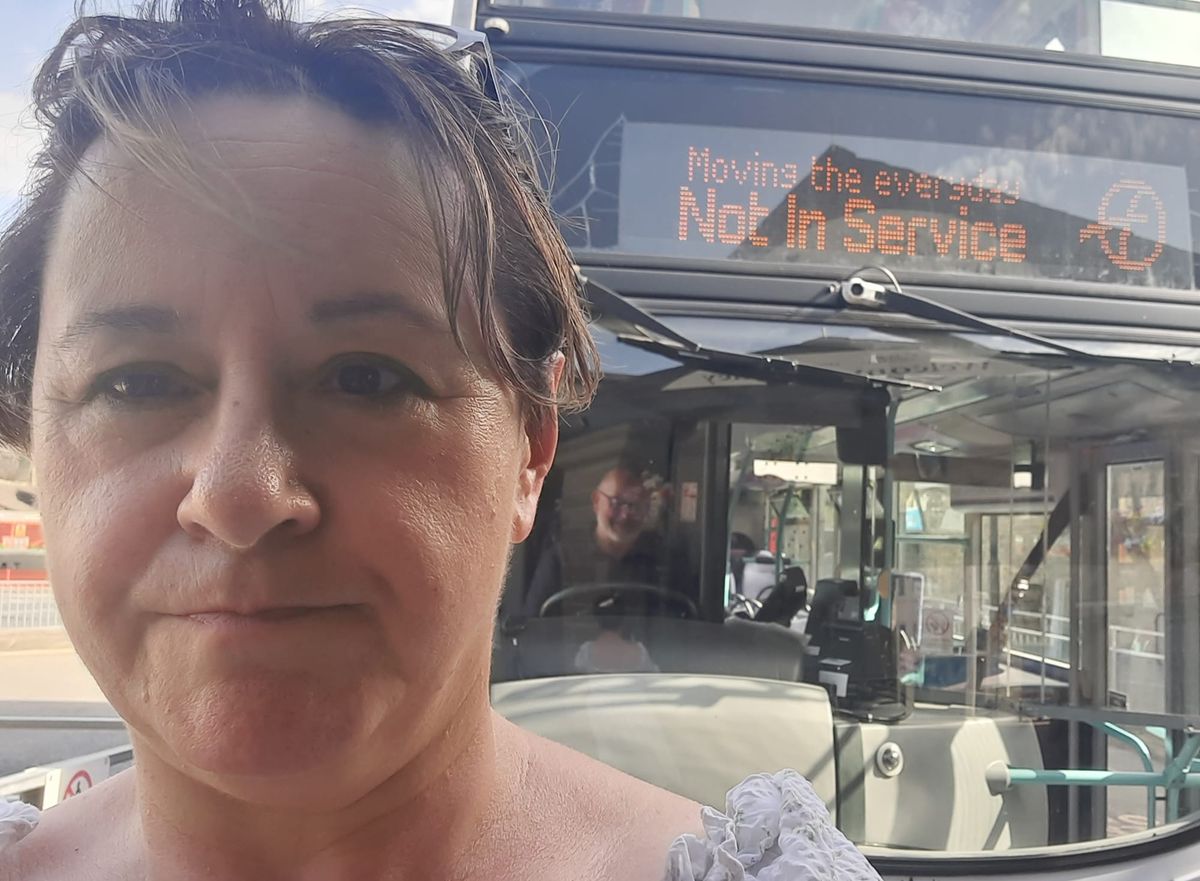
For reasons that can only be described as a momentary lapse in self‑preservation, I recently gave up my car for a fortnight and relied entirely on public transport. Not as a social experiment. And not as a mindfulness journey. But just to see what life is like for the people who don’t have a car. Or, as I now think of them, the last remaining optimists in West Yorkshire.
I live in Guiseley and over two weeks I attempted to reach Bramley, Pudsey, Rawdon, Otley, Horsforth, Holt Park and Menston – plus the usual zig‑zagging across Guiseley for volunteering and school meetings.
In a car, these are errands. On public transport, they’re a dystopian thriller in which the villain is a timetable and our hero is a carless climate activist.
The first thing you learn is that the bus routes and timetables are not merely inadequate – it’s as if someone blinded Salvador Dali and then asked him to design the system as punishment for a rebellious population.
A trip to Bramley Baths, typically 20 minutes by car, took me a full hour by bus via Leeds. Horsforth took 35 minutes. Holt Park, 30. Even Otley, which is so close to Guiseley you could cuddle it, was over 20 minutes each way.
By the end of the experiment, I’d spent just over eight hours travelling. The same journeys by car would have taken under three. That’s not a transport system. That’s a time‑dilating psychological experiment conducted by an alien race, surely Vogon in temperament if not in poetry.
Then there’s the planning. Nearly two hours vanished into deciphering timetables that appeared to have been written by a committee of malfunctioning smart fridges.
The 33 bus, for example, seems to operate on a principle best described as chaos with branding. Anyone who relies on buses daily deserves a medal, a hug and possibly a small therapy dog.
Walking becomes your default only because it is, depressingly, often faster than waiting for a bus that may or may not exist in this universe. Lovely if you’re mobile. A complete barrier if you’re not. It’s as if the system assumes we’re all triathletes with flexible schedules and a deep tolerance for disappointment.
And here’s the part that should make every councillor, commuter and climate‑anxious parent quietly implode. We all know there’s too much traffic. We all sit in the same jams, muttering about the lights being controlled by an algorithm with the creative energy of a damp worksheet and the potholes that could comfortably sustain a tribe of otters.
Everyone agrees the roads are clogged, the air isn’t great and driving is becoming a full‑contact sport. And the obvious answer – the one solution that would ease congestion, cut emissions, calm tempers and maybe even let us hear birdsong again – is for more of us to use the buses. Brilliant.
Except the buses don’t actually let you do that. They’re the one tool that could fix half the problems in Wharfedale and they’re about as reliable as a weather forecast written by an overweight cat who wants to retrain as a ladies’ hairdresser.
Financially, the experiment was bearable. Thanks to the £2 fare cap, the whole thing cost me £36: way less than a tank of fuel. And that’s the punchline. For those who are more time‑poor than money‑poor, the issue isn’t the fare. It’s the hours the system quietly siphons from your life like a bored Emperor Vampire.
No wonder so many households in Leeds own cars. It’s not decadence. It’s self‑defence. A rational response to a network that feels like a practical joke the city forgot to stop running.
Public transport exists, technically. But if we want fewer cars on the road, if we want cleaner air, safer streets and a future that isn’t on fire, the answer isn’t lecturing people. It’s building a system that doesn’t require residents to sacrifice half their week and their remaining sanity just to get to a meeting.
And while we’re all politely pretending the buses might one day evolve into something vaguely functional, we’re also being treated to the grand promise of the “Weaver Network”, a sort of shimmering transport utopia where everything connects, everything integrates and everything turns up. A lovely dream. A noble dream. A dream that, in West Yorkshire, currently has the same relationship to reality as a unicorn with a MetroCard.
Because the places that actually fixed their transport systems didn’t do it by wishing hard enough or commissioning a glossy consultation website. They did it by giving their regions real power, real money and the legal authority to use both without sending a pleading letter to the treasury like a Victorian orphan asking for more gruel.
They built institutions that could plan decades ahead, not months. They aligned housing with transit instead of scattering developments across the landscape like confetti at a wedding no one wanted to attend. They taxed employers who benefit from workers arriving on time, rather than treating public transport as a sort of optional charity project for the unlucky.
Meanwhile, West Yorkshire is attempting the same trick with a governance structure that looks like it was assembled from leftover parts of other governance structures.
We’ve got franchising coming, which is genuinely good; a future tram, which is currently more theoretical than gravity; a unified brand, which is essentially a very nice logo; and a funding model that amounts to crossing your fingers and hoping the chancellor is in a benevolent mood.
It’s the institutional equivalent of trying to build York Minster using a teaspoon and a motivational poster.
And this is the part where the comparison becomes almost cruel. The cities (mostly European) that cracked this didn’t just build trams. They built the machinery of government that makes trams possible. They created long‑term investment plans that survive elections. They treated transport as the backbone of the economy, not an afterthought.
They had the power to borrow, the power to plan, the power to integrate rail, buses, cycling, walking, and land‑use into one coherent system. West Yorkshire, by contrast, is expected to deliver a European‑grade network while operating under rules that would make a medieval guildmaster blush.
We might be saying we want a transport system like Europe, but we’re trying to build it using British funding rules designed to stop anything ambitious happening, British planning rules designed to stop anything happening at all and British political cycles that reset every time someone sneezes. It’s like trying to recreate the Vienna Philharmonic using three kazoo players and a broken tambourine.
Until West Yorkshire gets actual long‑term powers, actual devolved funding and actual control over rail, land‑use – and, of course, investment – the Weaver Network will remain what it currently is: a beautifully illustrated promise stapled to a bus network held together with hope, duct tape and whatever cosmic joke the 33 bus is performing this week. Whilst they try to sort it out, like everyone else, I’ll most often be stuck back in my car.
Also in The Journal: we went on a journey to discover more about councillor Stephen Place, Bradford Council’s new leader ...
"For a while, Stephen Place was content with sharing his two cents on social media. He had no qualms about what he posted. This was who he was, what he thought and how he saw the world. Not that it mattered (basic civility notwithstanding). He wasn’t worth paying attention to. He didn’t have anything interesting to say. He was just another unremarkable and predictable voice on the online right drowned out by the feverish clamour of a “virtually lawless public square” overflowing with people clamouring to be heard and seen in an AI-powered “golden age of stupidity”.