One year on Ilkley Moor
Adam Kingston is a photographer and researcher based in Leeds and Wrocław.

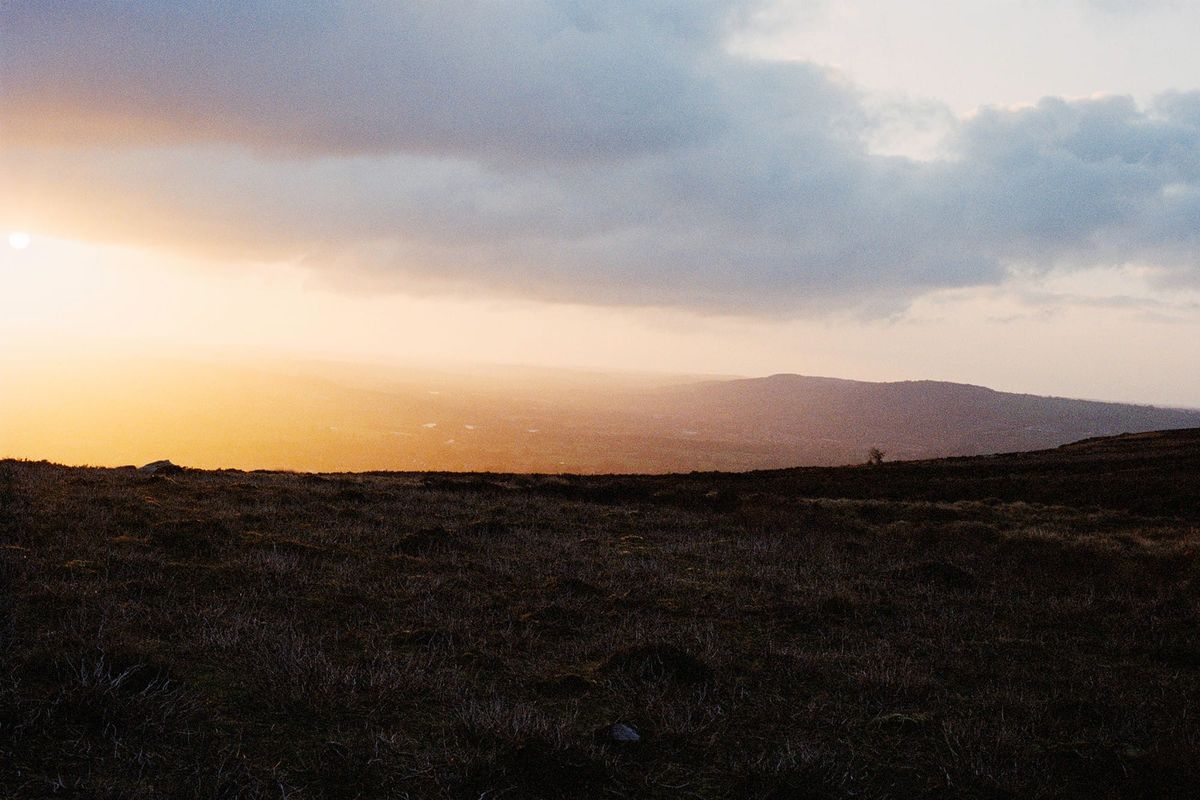
Since 2024, restoration work has been underway on Ilkley Moor to repair areas of degraded peatland and to improve the moor's resilience to flooding and wildfire.
The collaborative project, involving the Moors for the Future Partnership, Rebel Restoration, Friends of Ilkley Moor and Bradford Council, is part of a wider effort to restore West Yorkshire's upland habitats and slow the movement of water through the landscape.
The installation of stone, timber, coir and heather dams, designed to hold water on the moor and encourage re-wetting, is an example of some of the work that has been undertaken.
Tree planting, sphagnum moss plugs, vegetation cutting and the clearance of Sitka spruce also contribute to peatland recovery, natural flood management and greater habitat diversity.
A total of four fixed-point photography posts have been installed at sites where restoration work has taken place. Each post provides a consistent viewpoint across a specific section of moorland.
Members of the public are invited to scan a QR code and then take and submit a photograph to help the organisations involved build a visual record of how the landscape changes over time.
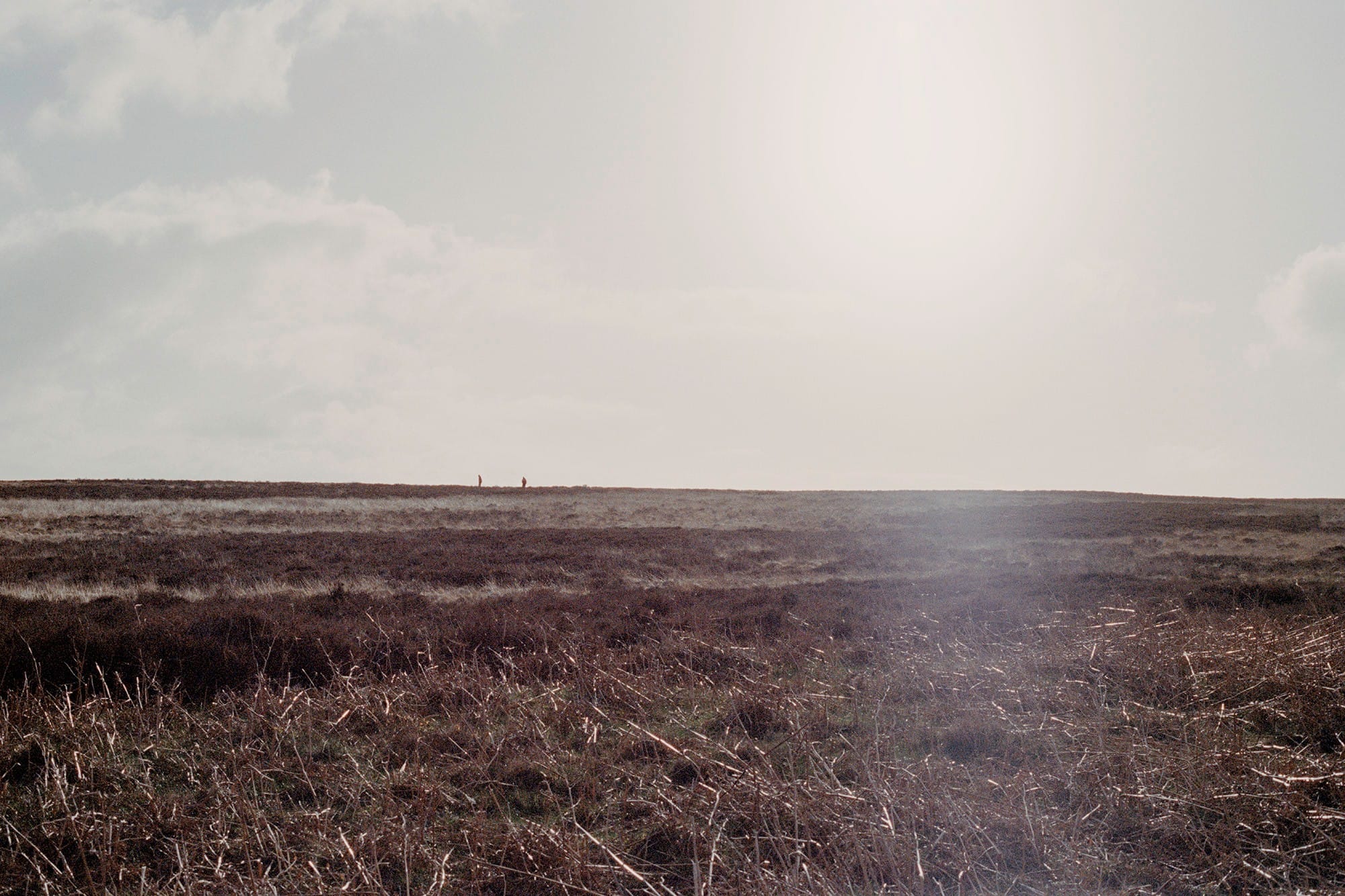
I came across the posts while making photographic work for an ongoing university project. At first, I saw them simply as tools to assist in documenting the landscape, but I was also interested in the kind of photography they encouraged.
A fixed-point post changes the usual relationship between the photographer and the landscape: the viewpoint is largely predetermined and the subject is already chosen. With so many decisions settled in advance, the emphasis shifts away from composition towards a reiterative process of observation, comparison and documentation ...
Aside from sounding like a lazy way to do photography, this approach feels appropriate to the restoration work itself, which is gradual rather than dramatic. Its effects are not always obvious from one visit to the next.
Fixed-point photography allows small changes to become visible through repetition, such as water gathering or receding, vegetation softening after cutting, colour moving through the grasses and heather, and the ground changing with rain, frost, sun and season.
I assumed most people using the posts would rest their phones on them, rather than use a proper camera, and often in less-than-ideal weather or light conditions. While public participation is central to the scheme, I felt I could contribute something more consistent and part of my motivation was technical.
Phone cameras increasingly make interpretive images. By default, they lift shadows, intensify skies, sharpen detail and often produce files that feel clear but are not necessarily faithful to the scene.
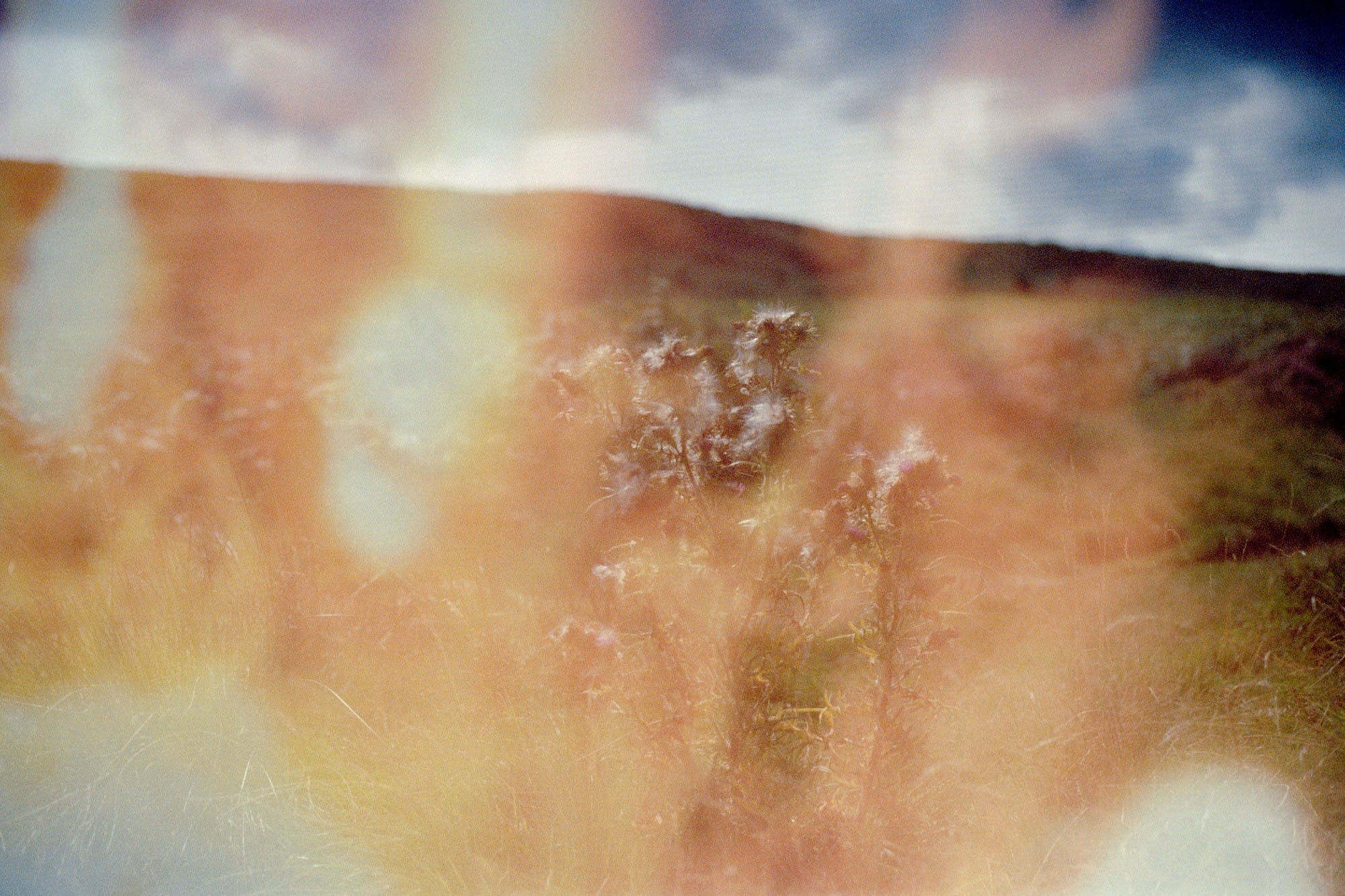
On the moor, where the atmosphere is often muted, damp or tonally subtle, that processing can alter the character of the landscape. I wanted the images to feel restrained and descriptive, preserving something of the conditions in which they were made. So I used a dedicated camera and avoided HDR or AI post-processing.
As I continued photographing from the posts, I realised their relatively stable positions could support a longer sequence. Although the posts shifted slightly in the ground over time, they were static enough to allow me to create time-lapse films from the resulting images.
I set myself the task of returning once a month for 12 months, working around the weather and my travels abroad, photographing from each point as consistently as possible.
The routine was simple, but it changed the way I looked. Each month I returned to the same positions, checked the frame, took the pictures and left. Some visits felt almost uneventful, as the landscape appeared to have changed little. But when the images were placed together, small shifts began to register.
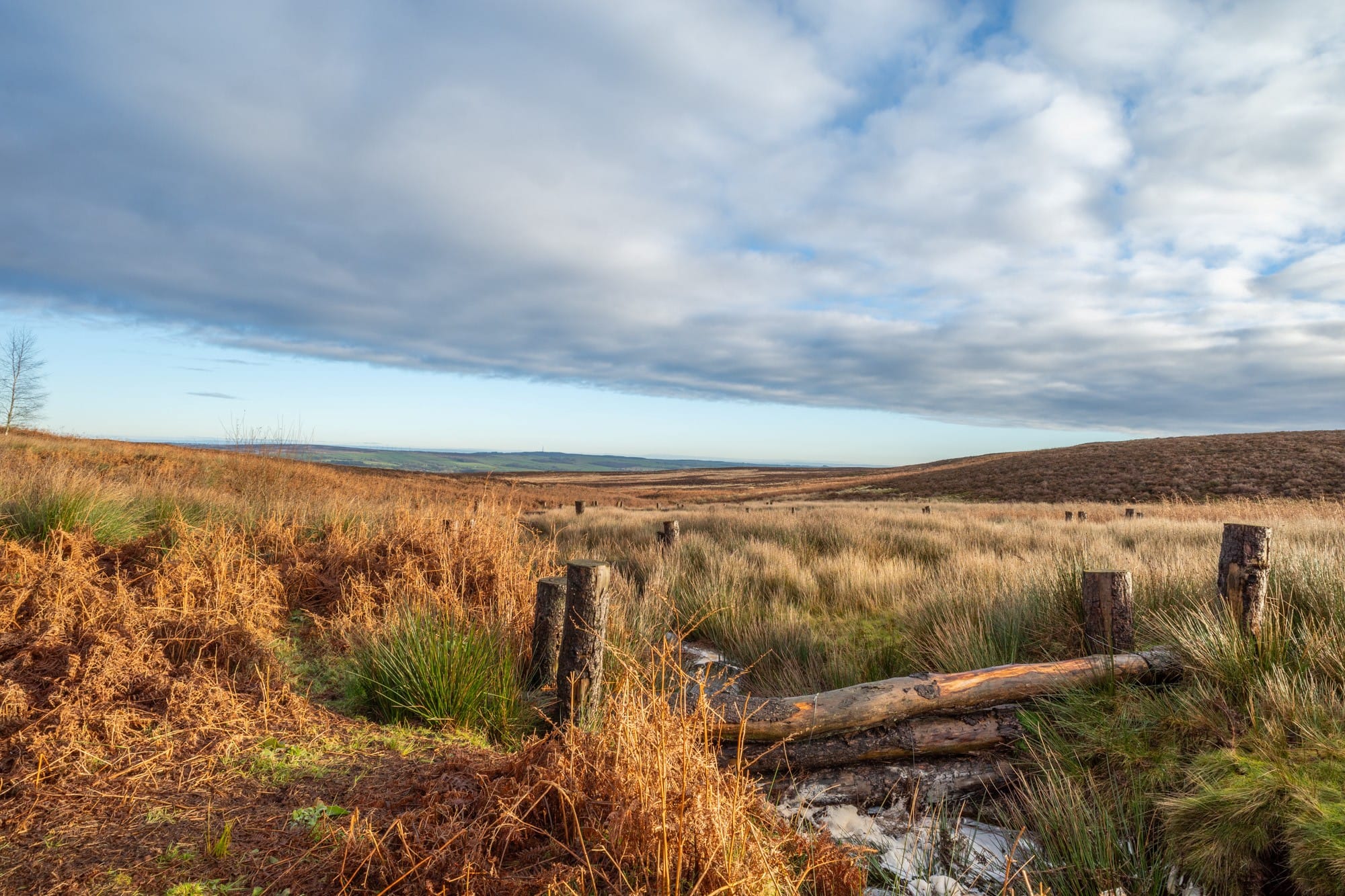
The films that emerged from the process are quiet rather than spectacular, which feels appropriate. Instead of presenting restoration as a dramatic before-and-after, they show it as a gradual unfolding across time.
The value of the work lies in the repetition: the same places, seen again and again, until subtle changes become perceptible. The work also gave me a greater appreciation of the wildlife that open moorland is able to sustain.
Across my visits, I saw an adder, common lizards, field voles, curlews, lapwings, a barn owl and, for my liking, far too many red grouse and pheasants. If the films lack one thing, it is a soundtrack. The song of skylarks overhead became as much a part of the experience as the changing light, water and vegetation.
There were other practical limitations. Fixed-point photography suggests precision, but the landscape resists complete control. The posts moved slightly. The weather varied. The low winter sun caused difficulties at two of the fixed points: at one, shadows fell into the frame; at another, the camera was aimed almost directly into the light.
Hello!
We launched a month ago and it's been a bit of a whirlwind. It's a great start – and we want to keep the momentum going.
But we need your help. So, if you believe in our mission and want to see more high-quality long-form journalism get made, do sign up as a paid supporter.
We're offering 40% off and throwing in a book, too.
The good feeling in your heart and soul is free.
Thank you!
I adjusted the time of day for those posts where necessary, accepting that consistency had to be balanced against making images that were clear enough to be useful.
I now plan to exhibit the films alongside grids of prints made from their constituent frames, together with related work from the moor. Ideally, the presentation will hold together the environmental significance of the restoration work and the photographic discipline of returning to the same viewpoint over time.
Each of the films made from the four posts can be found in an article on my website, along with further context on the restoration work.